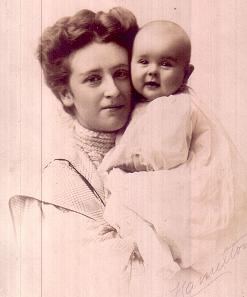
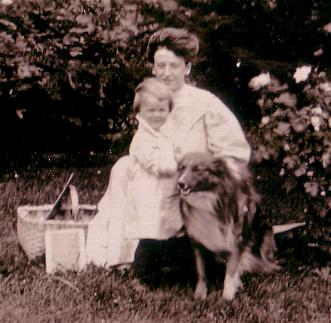
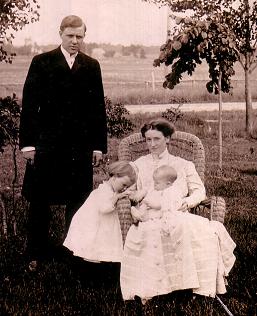
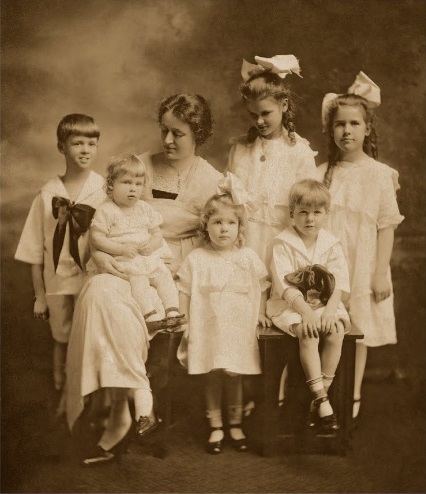
William and Rose Smith Drueke FamilyWilliam and Rose Smith Drueke Family
William Biggins, Coni Calligaro, Christopher Drueke, Paul Drueke, Richard Drueke, William F. Drueke III, Mary Kay Drueke Groening, James Griffin, Marilyn Hamill, Richard Klein, Maureen Netherland, Richard Owbridge, Duncan Pohl, and Emily Biggins Williams contributed to this family history.
European Cruise Drueke Games Drueke Postscript Census Directories Family Tree Descendants Home Page
William Born in 1883
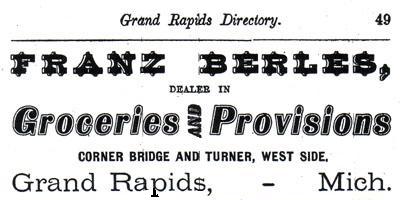
William's maternal grandfather was Franz Berles. Ther Berles family came from the same area of Germany as the Drueke family.
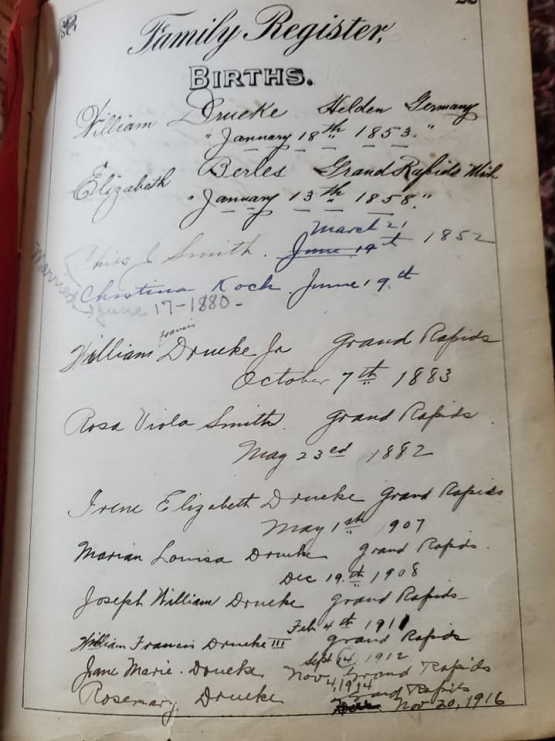
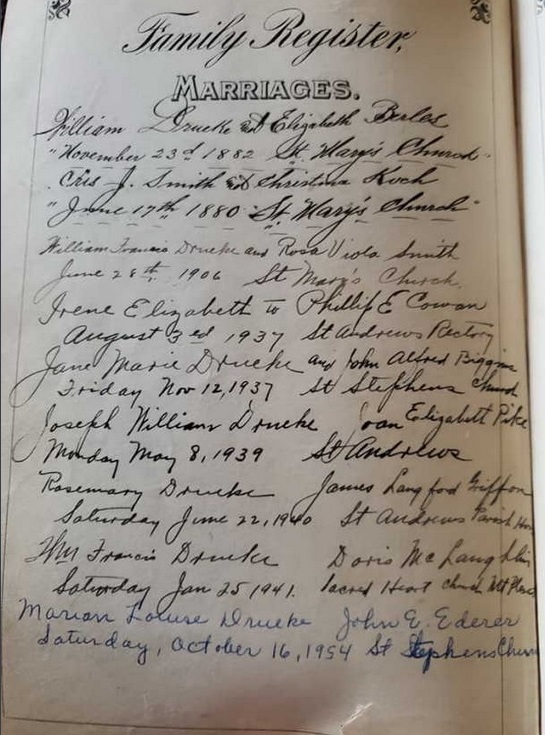
William Francis was known as Will. He was the first child of William Peter and Elizabeth Berles Drueke, who were married on November 23, 1882. Until Will was 3, they lived over the grocery store owned by his mother's family.
Will's father, William Peter, was a wholesaler of liquors and bar supplies. An advertisement on the front cover of the 1914 Grand Rapids City Directory proclaimed that Drueke-Lynch was "Grand Rapids Leading Liquor Store." William Peter came to America from Germany in 1871 with his sister Anna Sophia Drueke and her fianc Frederick William Wurzburg and Frederick's five children. They all lived in New York for two years, where Frederick had a dry-goods business, before all moving to Grand Rapids. William Peter was 18, his sister was 25. They took the steamship Thuringia from Hamburg to Castle Garden, New York. They came from Niederhelden, Westphalia, Germany. Niederhelden is 58 miles east northeast of Cologne and 16 miles southwest of Dorlar. Will's paternal grandfather, Johann Wilhelm Dr ke, had died in Helden in 1854. His grandmother, Josephina Bernardina Heller Dr ke, died there in 1887.
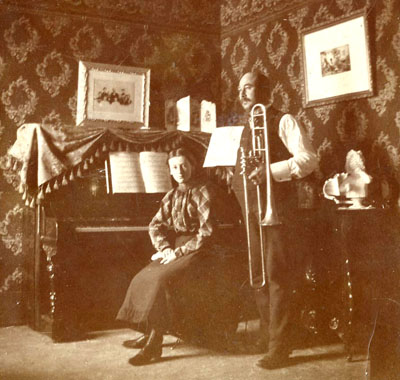
In 1886, Will's sister Antoinette was born. That same year, Will's family moved from the Berles Block a half mile south to 122 Summer Street (116 Summer Avenue NW after 1912). On March 17, 1887, Will's grandmother, Bernardina Heller Dr ke, died in Helden, Germany. She was 75. She had been a widow for 32 years. In 1887, Will's brother Frank was born. In 1889, Will's sister Louise was born. In 1893, Will's sister Bernice was born. In 1895, Will's brother Richard was born. In 1897, Will's brother Edwin was born. In 1899, Will's brother Clarence was born. Will met his future wife, Rose Smith, in 1900 or earlier. They lived four blocks away from each other in St. Mary's Parish. In 1900, Will made an entry in her Autograph Book: "June 8, 1900. Friend Rosa. We will never have Mat + Kate beat us in a-nother game of cards again, will we? Will Drueke Jr." Future grandson Richard Drueke transribed the book's entries and put them and images of the book in Autograph Book of Rosa V. Smith. In 1901, at age 18, Will was listed for the first time in the Grand Rapids directory. He was living at home and working as a clerk for D. Lynch. In 1902, he was promoted to salesman and in 1903 to traveling salesman. In 1904, he went to work as a traveling salesman in his father's wholesale liquor business. His daughter Marian recalled that as a salesman "he traveled all of Northern Michigan by train and horse and buggy." Will wrote his future wife Rose a love letter on the evening of Tuesday, October 18, 1904, while on a business trip. The Crosby Baldwin is 85 miles north of Grand Rapids, on the Pere Marquette Railway. |
Rose Born in 1882
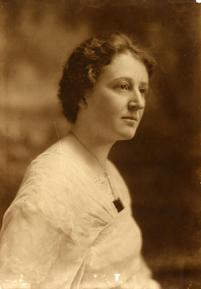
Rose was the only child of Cris J. and Christine Koch Smith. They were married in Grand Rapids on June 17, 1880. They lived with Christine's parents at 109 California Street, at the corner of Straight Street. This was nine blocks west of the Grand River and six blocks south of Bridge Street. Rose's father Cris was a second generation American of German descent. He worked practically his whole life as a musician. The 1882 Grand Rapids directory lists him as a musician at Smith's Opera House. The 1883 directory shows him as a partner with James W. York in Smith & York, a company that manufactured and sold musical instruments. Cris was at one time euphonium soloist with the Patrick Gilmore Band, and was one of the leading theater orchestra directors of Grand Rapids and Chicago.
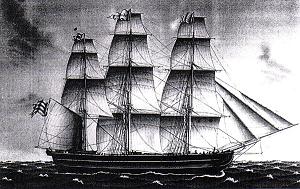
Rose's paternal grandparents were John and Mary Augusta Schickell Schmitt. Her grandmother had come over from Bremen to Baltimore with her parents on the sailing ship Johannes in 1834. They were from Kassel, which is 32 miles east northeast of Frankfurt. At that time, Kassel was in the north of the Kingdom of Bavaria. Now, Kassel is in the Kinzig-Main-Kreis region in the south of Hesse. They settled in Tiffin, Ohio. Rose's grandfather John Schmitt also was from Kassel. He had come to Tiffin in 1838, married Rose's grandmother in Tiffin in 1847, and moved to Grand Rapids with her in 1851. He was listed as a saloonkeeper in the 1860 census. Rose's grandfather John died in 1861 when her father Cris was only 9.
In 1887, Rose's mother Christine died at age 27. Rose was only five years old. Rose and her father Cris continued to live with Christine's parents, the Kochs. In 1888, Rose's grandmother Theresa Fassnacht Koch died in Grand Rapids.
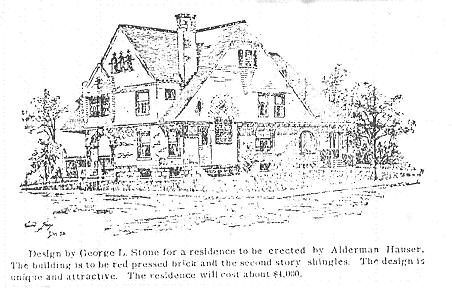
In 1889, Rose and her father Cris moved in with Cris' sister Rosa Smith Hauser, who was married to Charles Hauser. Charles was a mason with his father during the summer and a turner in the Widdicomb furniture factory during the rest of the year. They were married on Rose's birthday, May 23, 1882. They had no children of their own. Rose called them Tante and Uncle Charlie. Tante is the German word for aunt. Tante and Uncle Charlie had moved in with Rose's grandmother, Mary Augusta Schickell Schmitt, when they were married. So, Rose's father was moving into the house he lived in before he married Christine. The house was at 105 Gold Avenue (151 Gold Avenue NW after 1912). This is the southwest corner of Gold and Sibley Street, two blocks east and two blocks north of where Rose lived with her Koch grandparents. In 1889, Rose's father Cris was listed in the Grand Rapids directory as a musician with the Redmond Grand Opera House. In 1889, Rose's father Cris remarried. His new wife was Mary A. Hauser, Uncle Charlie's sister. In 1890, they had a son Crescenz, Rose's half brother. In 1890, Uncle Charlie started his own construction business with William Hayden. In 1891, they were joined by Edwin Owen. The company, now known as Owen-Ames-Kimball Co., continues in existence today In 1892-93, Charles Hauser built a new house on the site of 105 Gold Avenue and 50 Sibley Street. The new address was 113 Gold Avenue (151 Gold Avenue NW after 1912).
In 1893, Rose's father Cris moved to Chicago to further his career as a musician. He took his wife Mary Hauser Smith, but Rose, age 11, and her half brother Crescenz, age 3, stayed in Grand Rapids with Tante and Uncle Charlie. In 1894, Mary Hauser Smith had a second son LeRoy. In 1896, a third son, Karl, was born in Chicago.
On June 19, 1894, Alexander F. Zugelder, first cousin of Rose's mother, was ordained at age 25 at St. Andrew's Cathedral in Grand Rapids. He said his first Mass at St. Mary's Church. Fr. Zugelder had immigrated from K nigheim to Grand Rapids in 1888 at age 19 to study for the priesthood. Grand Rapids was a new diocese and had not yet established its own seminary, so he attended St. Francis Seminary in Milwaukee and the Grand Seminary at Montreal. He served as a pastor in four Michigan towns: Cadillac for eighteen months, Provemont for four years, Beaver Island for six years, and Beal City. He was transferred to Beal City in 1905.
Rose attended Union School in Grand Rapids. From 1896 to 1900, Rose had fellow students, friends, and family make entries in her Autograph Book. Her grandson Richard Drueke has transribed the entries and put them and images of the book in Rose Smith's Autograph Book. Everyone called her Rosa rather then Rose in those days.
In 1898, Otilia Leuchtweis, Rose's second cousin, immigrated to Grand Rapids from K nigheim at age 9 to live with her great uncle, William Koch, and his second wife Elizabth Lavo. Rose was seven years older than Otilia, but they became lifelong friends. Rose had lived with the Kochs herself and now only a few blocks away with Tante and Uncle Charlie. In the 1900 census, Otilia was living with the Kochs. In the 1910 census, she was living in Beal City with her uncle, Father Zugelder, and attending college. Otilia's mother, Mary Magdalena Zugelder Leuchtweis, had died in 1893, when Otilia was only four years old. Otilia's father, Michael Joseph Leuchtweis, remained in K nigheim when Otilia emigrated.
In 1903, Rose's grandmother, Mary Augusta Schickell Schmitt, died in Grand Rapids. In 1904, Rose received a love letter from her future husband Will. The Crosby In 1905, Rose's cousin once removed, Father Zugelder, was transferred to St. Philomena's Church in Beal City, Michigan. Sometime after that, he built two cottages on Coldwater Lake, a few miles west of Beal City. The land was leased from Robert C. Hyslop, who had a store and hotel-type place at the southeast end of the lake. After the lease was up, Will and Rose bought the cottage that was on the northeast side of Coldwater Lake between the 4H Club and the Isabella County Park, about 80 miles northwest of Grand Rapids. The address of the Park is now 1703 N. Littlefield Road in Weidman. Father Zugelder's cottage was on the north side of the lake. In 1905, Rose's grandfather William Koch died in Grand Rapids.
Rose was a pianist. From 1903 to 1906, at age 21 to 24, she was listed as a music teacher in the Grand Rapids directory, still living with Tante and Uncle Charlie. Eventually, she would become a member of the St. Cecilia Society and the Grand Rapids Symphony Society.
| |||||||||||||||||||||||||||||||||||||||||||||||||||||||||||||||||||||||||||||||||||||||||||||||||||||||||||||||
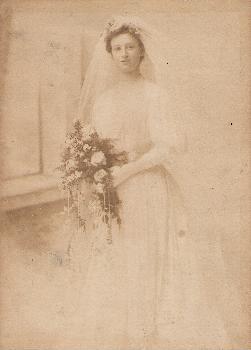
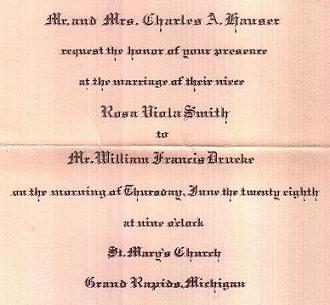
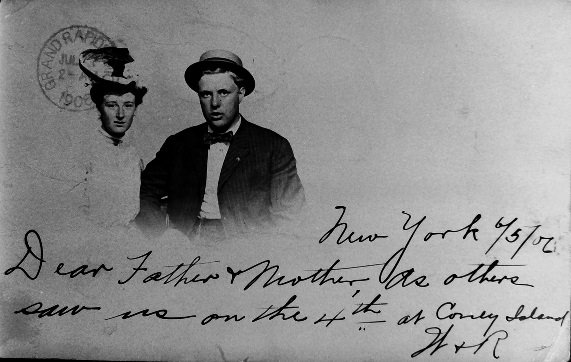
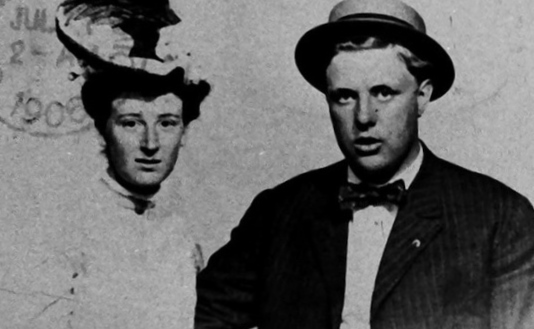
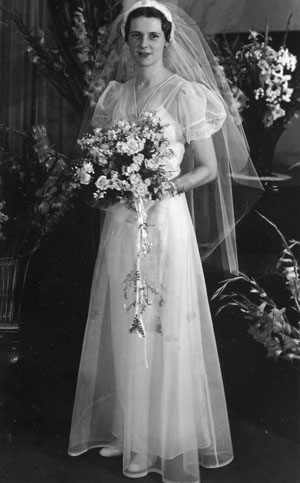
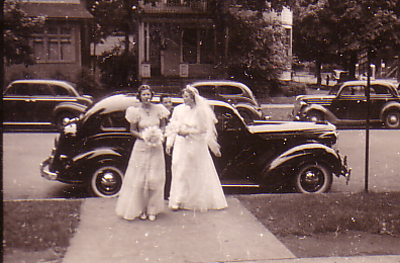
William and Rose Marry in 1906, Have 6 ChildrenGrand Rapids, 1906-1883. William Francis Drueke, 22, and Rose Viola Smith, 24, were married on June 28, 1906, at St. Mary's Church.
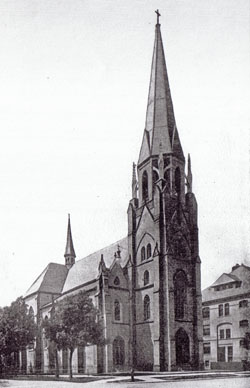
After the wedding, Will and Rose lived for a couple years at 101 Cass Avenue (441 Cass Avenue SE after 1912). Will continued to work as a traveling salesman in his father's liquor business The first of their six children, Irene Elizabeth, was born May 1, 1907. In 1907, St. Mary's Church celebrated its golden anniversary. St. Mary s parish was established in 1857 to meet the spiritual needs of the German population in the Grand Rapids area. The original church building, erected in 1857, was replaced in 1873 by the current building, a Gothic-style structure. The pastor in 1907, Father Joseph Schrembs, went on to become Archbishop of Cleveland. Among the founding parishioners of the church in 1857 were:
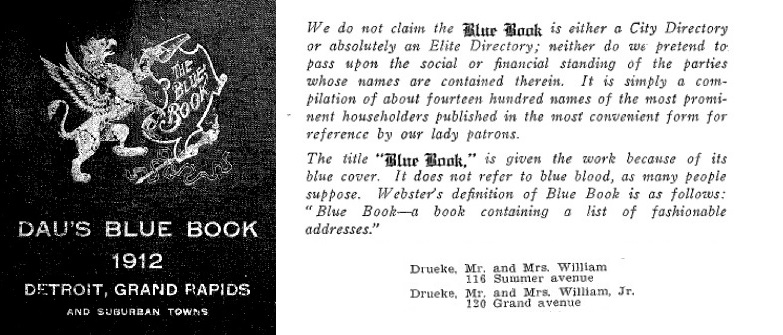
In 1908, the family moved to 96 Grand Avenue, which became 120 Grand Avenue NE with the renumbering that took place in 1912. They were to live here for 45 years and raise six children.
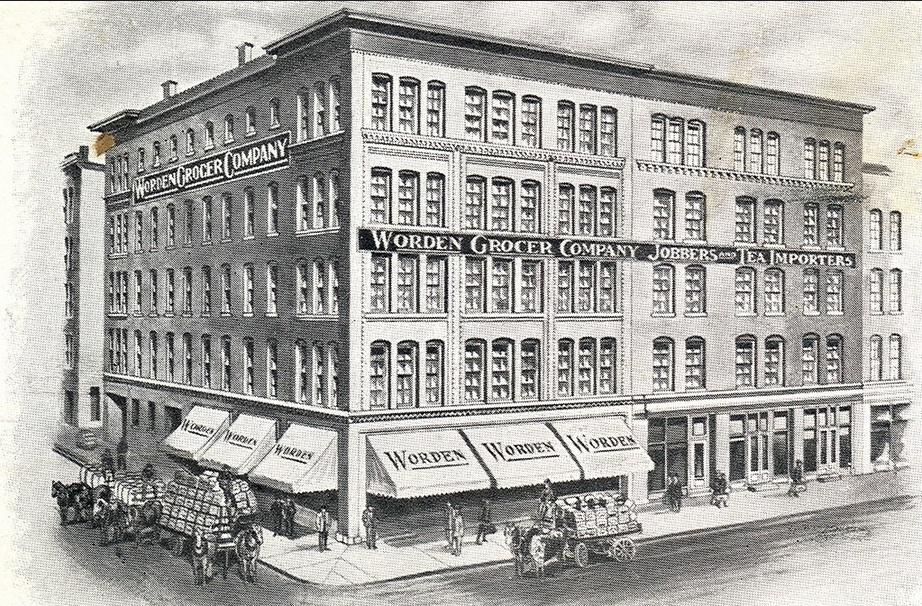
Rose and Will's second child, Marian, was born December 19, 1908. In 1910, Will left his father's liquor business to become a traveling salesman for the Worden Grocery Co., wholesale grocers, importers and coffee roasters, at the northwest corner of Ottawa and Island. Island is now Weston. His daughter Marian wrote that he was the top salesman many times. They sold Quaker coffee and Morton salt -- canned goods and spices.
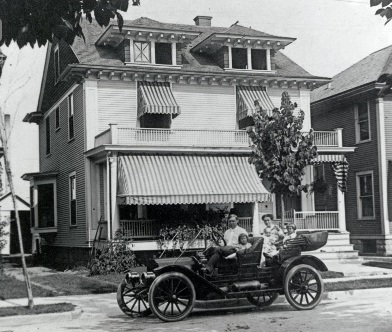
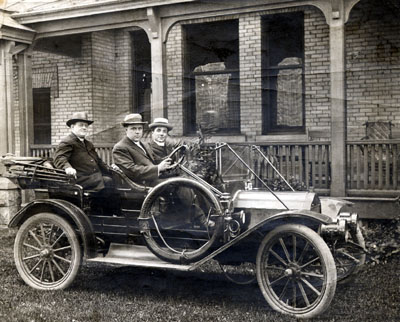
Their third child, Joseph William Drueke was born February 4, 1911. The photo shows Joseph with his sisters, Irene and Marian, and their parents sitting in their car, a Flanders 20 Suburban in front of their house at 120 Grand Avenue. Joseph looks only a few months old, so the photo must have been taken around June 1911.
Marian wrote about their father that "about 1910, he bought his first car and he was the first salesman in Grand Rapids to use his car for business - but the country roads were so bad he did not use the car out of town." The car was a Flanders "20" Suburban built in 1910 or 1911. It was a roadster with a 100-inch wheelbase and a 20-horsepower motor. The back seat was removable so that the area behind the front seat could be used for a barrel-roofed pickup box to carry items such as a salesman's samples. The Flanders 20 was manufactured at the former DeLuxe Motor Company plant in Detroit purchased in July 1909 by the Everitt-Metzger-Flanders Co. and Studebaker. The Flanders "20" and other E-M-F/Studebaker cars were mass-produced to compete with Henry Ford's Model T, but they never were a strong competitor. The E-M-F company was started in 1908. Studebaker invested in the company shortly after it was started, retained the management and name, and sold half the cars produced as Studebakers through its distribution channel. In 1911, E-M-F produced 26,827 cars, second only to Ford, beating out Willys-Overland, Maxwell, and Buick. But Ford sold 69,762 cars. Eventually, the E-M-F cars were taken over entirely by Studebaker, the only company that was successful in making the transition from horse drawn to gasoline powered vehicles.
Rose and Will's fourth child, William Francis Drueke, Jr., was born September 12, 1912. Bill's godfather was his uncle Frank Drueke. Godmother was Otilia Leuchtweis, his mother's second cousin. In September 1912, Otilia Leuchtweis became the first Chapter president of Theta Phi Alpha, a Catholic sorority started by Otilia and others at the University of Michigan.
In 1913, Will left Worden Grocery and went into a retail grocery partnership with James DeBoer and Glenn E. DeNise, called the James DeBoer Co. It was located on the west side of the river at 967 Bridge Street NW, on the northeast corner at the intersection with Lane Avenue. In 1913, Tante and Uncle Charlie moved across the Grand River from 151 Gold Avenue NW to 251 Union Ave NE, a few blocks northwest of Will and Rose. The Hauser family and the Smith family before them had lived at 151 Gold since at least 1867. In 1914, Will left the grocery business and became President and Treasurer of Quinn Stationery Co. at 131 Ottawa Avenue NW. This was between Pearl and Monroe across the street from the Michigan Trust Building, where Hauser-Owen-Ames and Uncle Charlie had their office. Will's daughter Marian wrote concerning her father that "he and Mr. Quinn bought out a stationery store that had been in business many years - it was on Monroe Avenue "downtown" - they had a big inventory to dispose of - dolls that were slightly imperfect and rum boxes." Marian went on to say that "Dad went on the road to sell rum boxes in 1914. At this time Germany and France and England were at war." She then says that "the buyer of Marshall Fields told Dad that they could not get chess sets and she gave him sample pieces of different sized sets. Dad came back to Grand Rapids and talked to Mr. Waddel about making these sets - he took his sample pieces - made in Grand Rapids - and went to New York to sell - business was so good he had Mother join him in New York. When he returned home he had to set up a factory to manufacture what he had sold." Rose and Will's fifth child, Jane Marie, was born November 4, 1914, at St. Mary's Hospital. She was baptized at St. Mary's Church by Father Felix Vogt, first cousin of Will. Jane's godfather was her uncle Joseph Hesse, who had recently married her aunt Louise Drueke. Godmother was her aunt Annette Drueke Matthews.
Sometime in the early 1900s, Will joined the Peninsular Club at 120 Ottawa Avenue NW, about a mile west of 120 Grand Avenue. The Pen Club began in 1881 as a club for local businessmen.
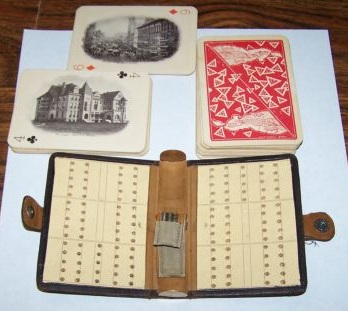
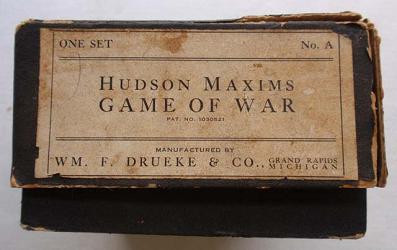
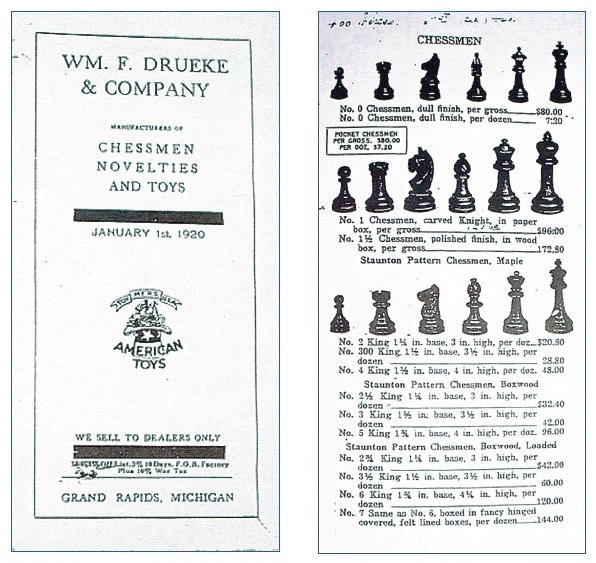
By 1916, Mr. Quinn was bought out by Albert G. Dickinson, a man whom Will had gotten to know. The company name was changed to Wm. F. Drueke & Co. and described in the Grand Rapids directory as a novelty manufacturer. The business grew to include backgammon, cribbage, and many other games. Albert probably was more of a financier than an active participant in the business because his name does not appear in the company name (Wm. F. Drueke Co.). The 1920 census shows Albert, 50, manufacturer, born in Ohio, living at 38 Lafayette Avenue with his wife, 4 children, and 2 servants. Albert G. Dickinson and his brother, H. Randel, established Dickinson Brothers (now Dickinson Press) in 1884 in Painesville, Ohio. In 1886 they moved the company to Grand Rapids. Rose and Will's last child, Rosemary, was born November 20, 1916. Rose was 34. Will was 33. In 1917, Will decided that demand was great enough that he could afford to make instead of buy his products. Wm. F. Drueke & Co. moved from Downtown to a small building he rented at 122 Scribner Avenue NW, which was back on the west side of the river. Wm. F. Drueke, Jr. recounts that bought the equipment necessary to make chess and hired his own workforce. At that time Grand Rapids had a big supply of skilled woodworkers. The war in Europe was still going on, and Will got a big contract to make breech sticks to clean guns for the U.S. Army.
On May 2, 1917, Rose's second cousin, Otilia Leuchtweis, 27, married John O'Hara, 27. Otilia's uncle, Father Zugelder, presided over the marriage in Detroit. Witnesses were Edward O'Hara of Ann Arbor and Mary Smith of Grand Rapids. John was a lawyer, born in New York. His parents were Martin and Elizabeth Dean O'Hara. Otilia's parents were Carl and Magdelina Leuchtweis. In the 1920 census, Otilia and John had a child, John, and were living at 1149 Virgina Park in Detroit. There is a biography of John O'Hara in the 1922 History of Detroit.
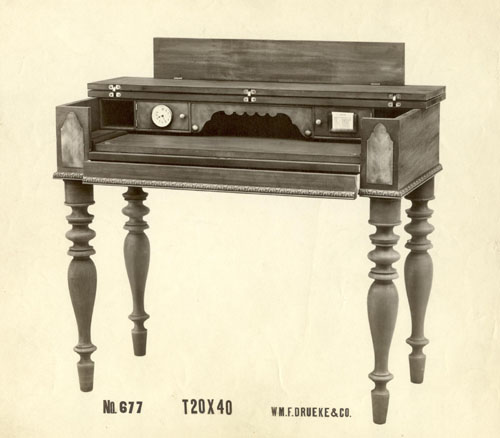
On April 30, 1918, Will's father, William Peter Drueke, was forced out of business by a Michigan prohibition law that preceded the 18th Amendment to the U.S. Constitution by almost two years. He was 65. On September 12, 1918, two months before the end of the Great War, Will registered for the draft in Grand Rapids. His draft registration says he was a manufacturer, age 34, six feet tall, weighed 190 pounds, had blue eyes and brown hair. On the day he registered, the American Expeditionary Forces under commander in chief General John J. Pershing launched its first major offensive in Europe as an independent army. The U.S.-led attack occurred in the Saint-Mihiel salient, a triangular area of land between Verdun and Nancy occupied by the German army since the fall of 1914. The Saint-Mihiel salient was strategically important as it hindered rail communications between Paris and the eastern sections of the front, Eliminating the salient was necessary before the final Allied offensive of the war could begin. Fortunately for the American forces, the Germans had begun pulling out of the salient two days before the offensive was launched. After an early morning artillery bombardment, U.S. infantry and tanks began the attack. Resistance was relatively light, and by September 16, this area of France was liberated from German occupation. The Great War ended November 11, 1918. Wm. F. Drueke, Jr. recounts that when the war ended Will was left with a big supply of breech sticks. So he decided to make toy rakes, hoes, and shovels using the breech sticks for the handles and sell them to toy departments. By 1919, the business had outgrown the small building at 122 Scribner on the west side, so Will bought a larger building back on the east side of the river at the southeast corner of Marshall Avenue and the Pere Marquette Railroad. The Pere Marquette is now CSX. Soon after moving to Marshall Avenue, Will added a furniture line of tables, desks, and other items for the home. The product line included spinet desks, secretary desks, bookshelves, and tables. Drueke was one of the first companies to put an electric light in a desk. Richard Drueke has 50-60 original photographic plates from the Drueke furniture catalogue. The Grand Rapids Public Library has a number of them, as well as price lists.
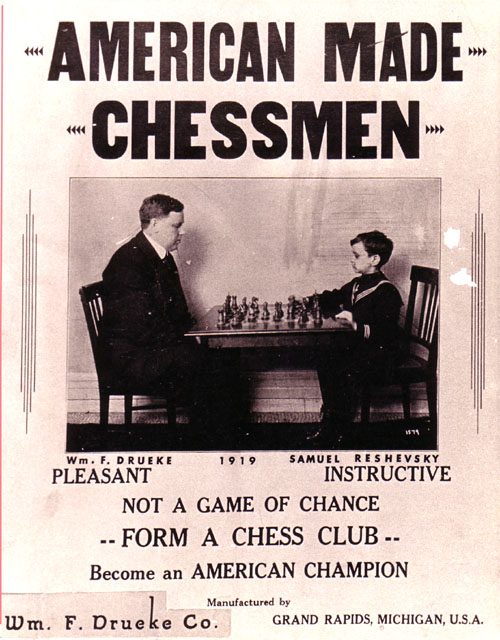
On November 3, 1920, Samuel Reshevsky, chess prodigy, age 8, moved to the United States from Poland with his parents, where they made a living from the talent of their child. William Drueke wrote Samuel Reshevsky, a Child Prodigy, an account of his relationship with Sammy Reshevsky. He says that he acted as Sammy's advance agent and had Sammy "playing two games in every city west of Chicago, one in a store and one in a club. Starting in Chicago and playing at the Fair Store, it took 44 police to take care of the crowd." The playing had been done only in clubs until Will suggested trying department stores. The idea was tested at Strawbridge and Clothier in Philadelphia, and it was "a tremendous success." Will wrote that "I, being the only manufacturer of a line of Chessmen in this country at that time, became interested in him, not only as a business promotion of the game, but his ability to interest people that had never played the game." In 1924, philanthropist Julius Rosenwald made Sammy give up exhibition chess at the age of 13 so he could get an education. He graduated from the University of Chicago in 1933 with a degree in accounting. After finishing school, he worked as an accountant for a Manhattan engineering & construction firm. He never played chess professionally, but won the U.S. chess championship seven times. In 1958, he was beaten in the U.S. championship by 14-year-old Bobby Fischer, who in 1972 would become the first American to win the world chess champion. Samuel Reshevsky died April 8, 1992. The New York Times wrote at the time of his death, that he astounded the world with his feats as a boy, dominated American chess for four nearly decades, and scored spectacular victories in international tournaments.
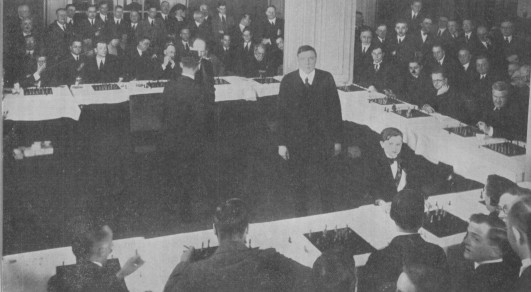
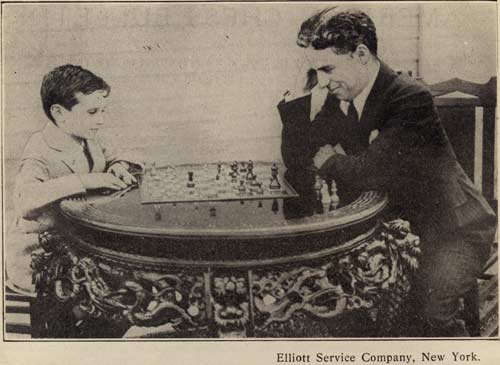
On July 22, 1920, the New York Times reported the results of the Masters' chess tournament on the Million Dollar Pier in Atlantic City. The article noted that William Drueke of Grand Rapids was one of two donors of special prizes. In 1921 Sammy met the world's most famous movie star and a posed publicity photo showed them playing chess while Charlie Chaplin was editing "The Kid" in his Hollywood studio. MY AUTOBIOGRAPHY penned by him in 1964 at age 75 recalls this encounter. The American Chess Bulletin for January 1922 includes a picture on page 2 and the following:
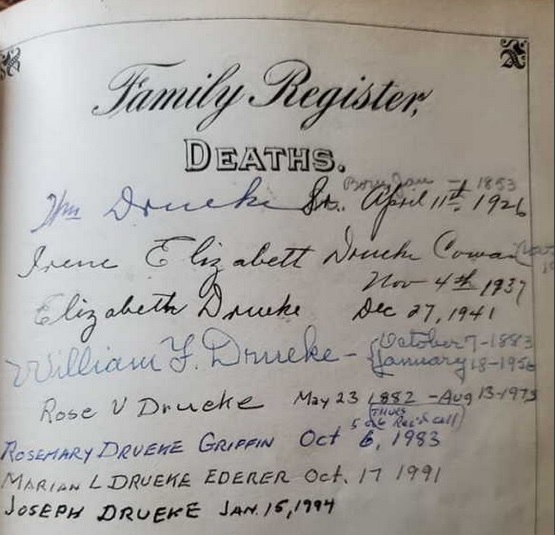
In 1924, Rose's brother, Crescenz Smith, married Ethel Gazan. They had three children: Charles in 1927, Ethel Rose in 1928, and Marilyn in 1931. Ethel was born in Sheerness, England. Sheerness is in the Thames estuary, on the Isle of Sheppey. On April 11, 1926, after eight years of retirement, Will's father Willian Peter Drueke died. He was survived by his wife Elizabeth. They had been married 44 years.
In September 1926, daughhter Irene started college at the University of Michigan in Ann Arbor. She joined Theta Phi Alpha, a Catholic sorority started in 1912 by Otilia Leuchtweis, her mother's second cousin.
Wm. F. Drueke, Jr. recounts that, the Wm. F. Drueke Co. was sold in 1926 when Will's friend, Albert Stickley offered him a job as sales manager for the much larger Stickley Brothers Furniture Company in Grand Rapids. Will's stay with Stickley Furniture was short-lived as they had a disagreement over the purchase of some Stickley stock. Will was out of a job. After that, as his son tells it, Will sold hospital furniture, steel cabinets, and whatever to keep Irene in college at the University of Michigan, Marian at the University of Illinois, and feed the rest of the family. The Drueke Company was not listed in the 1926 Grand Rapids directory. In 1927, Wm. F. Drueke & Co. is listed at 1600 Bishop SE. From 1928 to 1934, the Drueke company name was not included in the Grand Rapids directory.
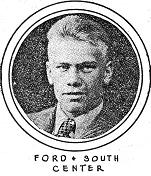
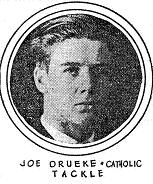
Son Joseph played tackle on the Catholic High School football team. On Sunday, December 2, 1928, the Grand Rapids Herald named him first-team All-City Tackle. Also selected for that team was Gerald Ford, the center on the South High School football team. Gerald Ford became President of the United States in 1974. Full Team. According to son William, Will bought stock on margin in 1926 and 1927. Following the 1929 stock market crash, he lost $7,000. In the 1930 census, Will was listed as a salesman for a furniture factory.
The Furniture Manufacturer for September 1931 reported in "Michigan Matters" that Irene had written a history of furniture in conncetion with her work for an advanced degree at the University of Michigan. Furniture Manufacturer, September 1931 Michiganensian 1929 Michiganensian 1931 - 1 Michiganensian 1931 - 2
In 1932, Joe graduated from college. In January 1932, William, Jr., graduated from Central High School. He attended Grand Rapids Junior College (now Grand Rapids Community College) until 1933. When Jane reached college age in 1931, the family decided not to send her to a four-year college because of the economy. Instead, Jane attended Grand Rapids Junior College from 1931 to 1933. Rosemary attended the University of Detroit.
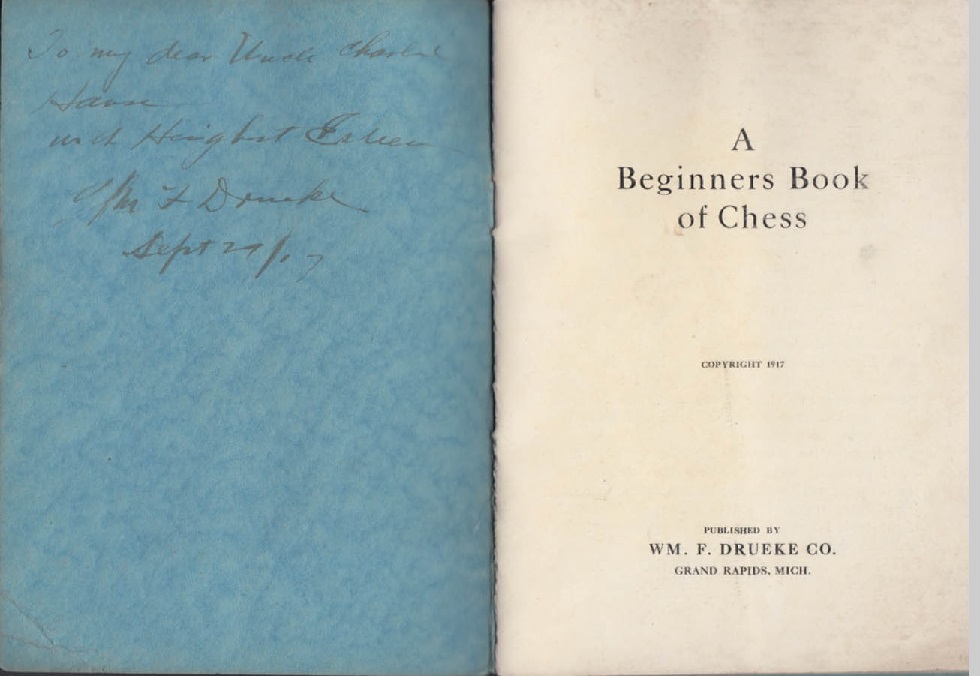
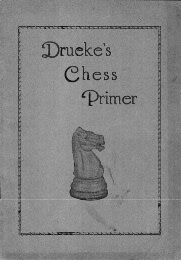
In November 1932, Rose's father Cris J. Smith died at age 80 in Kansas City, Missouri, where he was living with his son Karl. He was buried in Greenwood Cemetery in Grand Rapids. In 1932, Will re-established the Drueke game business in their home. He resumed making cribbage and chess sets. For a time, he imported chess pieces from France. After refinishing and repackaging them, the pieces were sold with the Drueke label. William, Jr., recounts that the basement was used for chess dipping, boxing, and other assembly work, which was done after school by Jane, 16, and Rosemary, 14. The attic was used for an office, which was run by Marian, 24. William, Jr., hooked up a phone line from the basement to the attic. The Grand Rapids Chair Co. cut, shaped, and sanded the cribbage boards. The Sterling Brush Co. drilled the peg holes, put in a peg pocket in the bottom, and buffed a wax finish on the boards. The John Seven Co. supplied the shellac. Imperial Metals made the pegs. The Grand Rapids Box Co. made the boxes. Around 1932, Drueke's Chess Primer was written to instruct beginning players. The primer was composed by William A. Shinkmann (1847-1933), a life and fire insurance agent who was in business with Peter Schickell, a son of John Adam and Maria Eva Schumm Schickell, and whose brother Joseph had married Emiline Boxheimer, a granddaughter of John Adam and Maria Eva Schumm Schickell. The primer is similar to A Beginner's Book of Chess, prepared in 1917 for the original Drueke game company. Both booklets were obtained by William Biggins on eBay.
By 1935, the business was doing well enough to rent space in the Shaw Building at 640 Front Avenue NW, on the west side of the Grand River. The company added poker chips and pipe racks, dice, dominoes, roulette racks, gavels, and a variety of small hand games. The company was listed in the Grand Rapids directory as Wm. F. Drueke, Inc. Wm. F. Drueke was listed as President, Joseph W. Drueke as Vice President, Jane. M. Drueke as Secretary, and William F. Drueke, Jr., is Treasurer. During the Great Depression, in 1935, Rose's brother, Crescenz L. Smith, 45, went to Detroit to look for work. He left his wife Ethel and three young children and never returned. A private investigator was hired but never found him. Ethel and the children went to live with Charles and Rosa Smith Hauser, who had raised Crescenz. Social Security records indicate that he joined Social Security in New York City in 1937. His 1942 WWII draft registration shows his residence as the S.S. Nimba and his employer as ALCOA Steamship Lines, New York City. Social Security records indicate that he died in New York in 1962. In June and July of 1935, Will and Rose took a trip out West. For Will it was mostly business. For Rose it was pleasure, but a strenuous trip nonetheless. While they were on the trip, their daughter Rosemary graduated from Grand Rapids Junior College. In March 1936, Will and Rose took a trip to Florida. For Will it was mostly business. For Rose it was pleasure, and meeting friends from Grand Rapids who were wintering in Florida. From 1936 to 1941, Will's brother Clarence worked for the Drueke company. Clarence's wife Elizabeth also worked for the Drueke company in 1936 and 1937. The Winter 1937 edition of The Compass, official publication of Irene's sorority, Theta Phi Alpha, had an article about interesting Detroit alumnae that featured Will and Rose's daughter Irene. The article was written by Ruth Brady (who later married Harvey Russell Wickes of the Wickes Corporation and has a public library named after her in Saginaw). The article noted that Irene had graduated from the University of Michigan in 1931 with a degree in decorative design and went on to say "most of us wouldn't have had the courage to attempt a career in this field, knowing its limitations, but this did not concern Irene. Coming as she does from a Grand Rapids family that had long been associated with the finest traditions in furniture design and craftsmanship, she had learned much that was necessary to her training long before she began her college course." The article said Irene took a position at J. L. Hudson Co. Department Store and eventually was made decorating consultant for the store with headquarters in their model home. "It is her job to help plan the furnishings and decorating for all types of homes, from mansion to cottage, and she is called upon to give advice on every kind of interior decorating problem from period designs in furniture to harmonizing rag rugs, or as Irene puts it, she is sought as an authority on everything from where to build a stairway in a house to the correct shade to paint a bathroom scales."
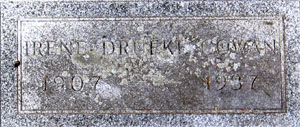
Marriage Certificate for Irene and Philip On Friday, November 12, 1937, Will and Rose's daughter Jane married Al Biggins, a corrugated box salesman for Container Corporation of America. On Thursday, November 4, 1937, Jane's birthday, and a week before Al and Jane were married, Irene was killed in a car being driven by Al. They were on their way to a rehearsal dinner. Irene had been married just two months earlier. The accident was in the headlines of both Grand Rapids dailies. Following are excerpts. The Grand Rapids Press, Friday, November 5, 1937 The Grand Rapids Herald, Friday, November 5, 1937
Philip E. Cowan, 1906-1981, moved to Highland Park, Michigan, in 1939. In 1942, he married Mayme Eljaana Wiljanen in Detroit. Children Jon and Martha were born in 1944 and 1949. He was active in the community. In 1954, while he was general manager of a pharmacy on Woodward Avenue, he was appointed to complete the unexpired term of the mayor of Highland Park, who had moved to another city. Philip died in Grand Rapids in 1981, leaving his wife Mayme and two children. Al and Jane were married by Monsignor D. E. Malone on Friday November 12, 1937, at St. Stephen's Church in Grand Rapids. It must have been a somber event because of Irene's death. Originally, the wedding was to be on Saturday November 6 at St. Andrew's Cathedral.
Will's mother Elizabeth Berles Drueke celebrated her 80th birthday on January 13, 1838. Her children gave a big party for her at the Peninsular Club in Grand Rapids. In 1939, the Drueke company was listed in the Grand Rapids directory as Drueke Novelty Co., novelty manufacturers. On May 8, 1939, Will and Rose's son Joseph, age 28, married Joan Pike, age 24, at St. Andrew's Cathedral in Grand Rapids. Joe worked for the Drueke company, focusing on sales, and also had his own game company. Joe and Joan lived in Grand Rapids their whole life. In 1940, their first child Irene was born. In 1942, there second child Joseph was born. In 1943, there third child Kathleen was born. Kathleen was professed in 1968 as Sister Mary Joseph, a Carmelite nun. In 1945, their fourth child Frederick was born. In 1948, their fifth child Susan was born. And in 1952, their sixth child Paul was born. In 1940 and 1941, the Drueke company was listed in the Grand Rapids directory as Drueke Brothers (Jos. W. and Wm. F., Jr.), toy manufacturers.
On January 25, 1941, Will and Rose's son William, age 27, married Doris McLaughlin, age 20, at Sacred Heart Church in Mt. Pleasant, Michigan. Bill met Doris in the Summer of 1940. While staying at the cottage at Coldwater Lake that summer, he spent some time in nearby Mt. Pleasant, where he met Doris. Bill worked for the Drueke company, focusing on manufacturing, and eventually became president of the company. Bill and Doris spent their whole married life in Grand Rapids. In 1941, their first child Betsy was born. In 1943, their second child Bill was born. In 1944, their third child Carole was born. In 1946, their fourth child David was born. In 1949, their fifth child Mary Kay was born. In 1951, their sixth child Richard was born. In 1954, their seventh child Rose was born. On December 27, 1941, Will's mother, Elizabeth Berles Drueke, died at age 83 in Grand Rapids. On the same day, Elizabeth Drueke was born to William and Doris McLaughlin Drueke.
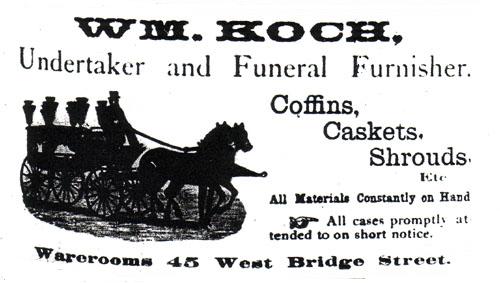
In 1941, the Drueke factory was moved a few blocks west to a building purchased for $15,000 at 601 3rd Street NW. The building had formerly been occupied by the Grand Rapids Casket Co. On April 27, 1942, four months and 20 days after Pearl Harbor, the United States conducted it fourth WWII draft registration, referred to as the "Old Man's Draft." It registered men between 45 and 64 years old. Will's WWII draft card says he was age 59. At that time, the German Luftwaffe was bombing the cities of Bath and Norwich in England, and the RAF was bombing the city of Rostock in Germany. Nine days ealier, Jimmy Doolittle's B-25s had bombed the cities of Tokyo, Kobe, Yokohama, Osaka and Nagoya. On December 3, 1943, the New York Times ran an advertisement for Esquire Magazine promoting its Holiday Issue for Christmas 1943 and listing its advertisers, including Wm. F. Drueke & Sons. From 1941 to 1946, Will and his sons Joe and Bill applied for and received patents for the design of eight games. Click on the patent number in the table below to see the file at the U. S. Patent Office.
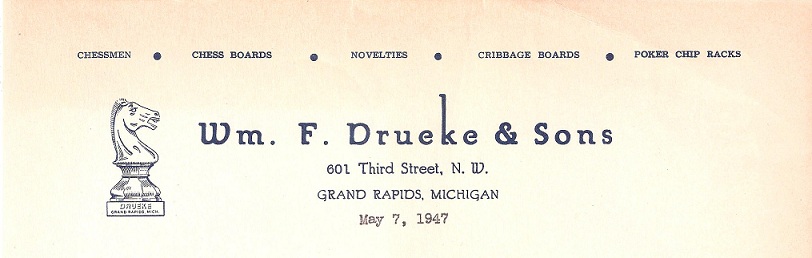
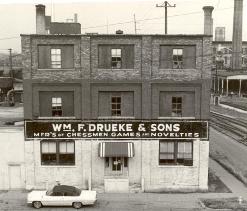
Travel games, called Play A Way, were shipped overseas to servicemen in the armed forces during World War II. These included chess sets and cribbage boards, roulette, and other games. Beginning in 1942, the Drueke company was listed in the Grand Rapids directory as "Wm. F. Drueke & Sons (Wm. F., Wm. F., Jr., Jos. W and Marian L.)." During World War II, Drueke cribbage sets included a brochure on How to Play Cribbage that promotes Drueke Pocket Games as Practical, Compact and Complete Miniature Games: The Ideal Gift for Men in Service!The brochure was obtained by William Biggins on eBay. Below is a Drueke letterhead from a 1947 letter to U. S. Sporting Goods Co., Van Wert, Ohio. Source: Marvin P. Gardner Jr., Centerville, Ohio, via eBay, January 2013.
In 1944, Rosa Schmitt Hauser (Rose's "Tante") died at age 90. In 1946 Charles A. Hauser (Rose's "Uncle Charlie") died at age 91. The March 1946 edition of Playthings magazine contains a advertisement for Drueke products and an invitation to stop by the Drueke's room at the McAlpin Hotel in New York during the Toy Fair.
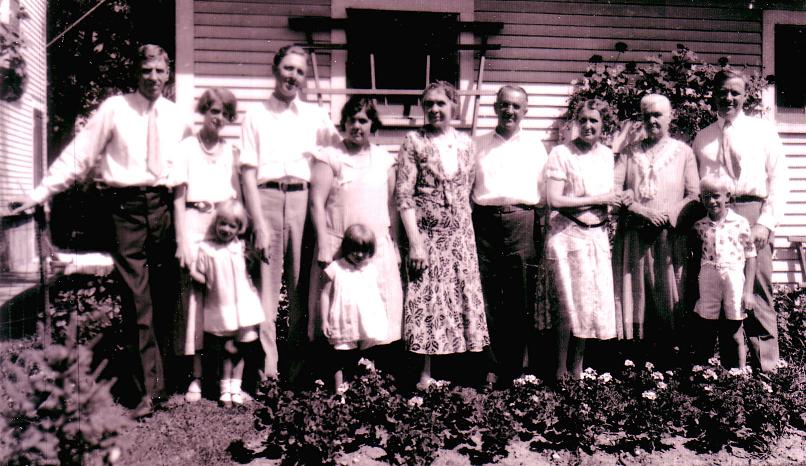
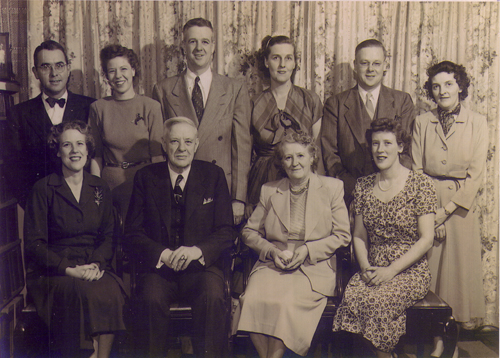
Sometime in the late 1940s, Will and Rose acquired Father Zugelder's cottage at Coldwater Lake and had it moved across the frozen lake during the winter to a new foundation built up the hill from their cottage. This second cottage accommodated their growing number of grandchildren. In March 1950, Will and Rose had their children and grandchildren with them for a reunion at 120 Grand Avenue. The following pictures were taken at the reunion.
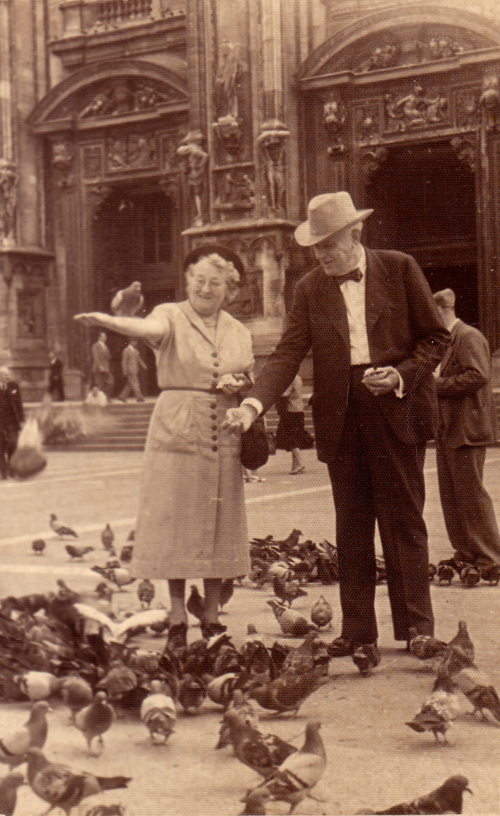
Several months later in 1950, Will and Rose took a cruise to Europe. They brought home Omega watches from Switzerland for their older grandchildren. While on this trip to Europe, Will and Rose went to Helden, in the Westphalia section of Germany, to visit Emma Henze. Will's father, William Peter, had an older sister, Anna Maria Klementina Dr ke, who married Clemens Henze in 1867. So, Emma was Will's first cousin.
In 1953, Will, age 70, and Rose, age 71, built a new one-story brick house so that they would not have to climb stairs. The house was 2.5 miles southeast of 120 Grand Avenue SE, at 1624 Seminole Road SE in St. Stephen's parish in Grand Rapids. Their grandson Jim Griffin recalls that Will and Rose had the house built on Seminole because they were in a serious auto accident in Mt. Pleasant. Some teenage boy hit them broadside knocking Will out of the car and Rose almost lost her life. The vehicle hit them on her side of the car. Rose was told she would never walk again. A one-story house was built to accommodate a wheel chair. Rose fully recovered, however, and used her legs for many years after that.
In 1954, the Drueke company purchased the first of three plastic injection molding machines to manufacture plastic game parts for interlocking poker chips, chess pieces, and cribbage pegs. Prior to that, plastic game parts were contracted out. On October 16, 1954, Marian, age 45, married John Ederer, age 47, in Grand Rapids at St. Stephen's Church. They lived in Saginaw and owned a cottage on Saginaw Bay at Fish Point. They rented a cottage on Drummond Island off the Upper Peninsula of Michigan, about 50 miles east of the Mackinac Bridge, where they fished a lot. Marian had land and a small home called Cherry Lane contiguous to her brother William's home on Plymouth Road. Because her property could not be sold for zoning reasons, she gave it to her brother when she moved to Saginaw. In 1955, the Grand Rapids directory listed the officers of Wm. F. Drueke & Sons as Wm. F. Drueke, President; Jos. W. Drueke, Vice President; Mrs. Marian L. Ederer, Secretary, and Wm. F. Drueke, Jr., Treasurer. | ||||||||||||||||||||||||||||||||||||||||||||||||||||||||||||||||||||||||||||||||||||||||||||||||||||||||||||||||
William Dies in 1956 at age 72
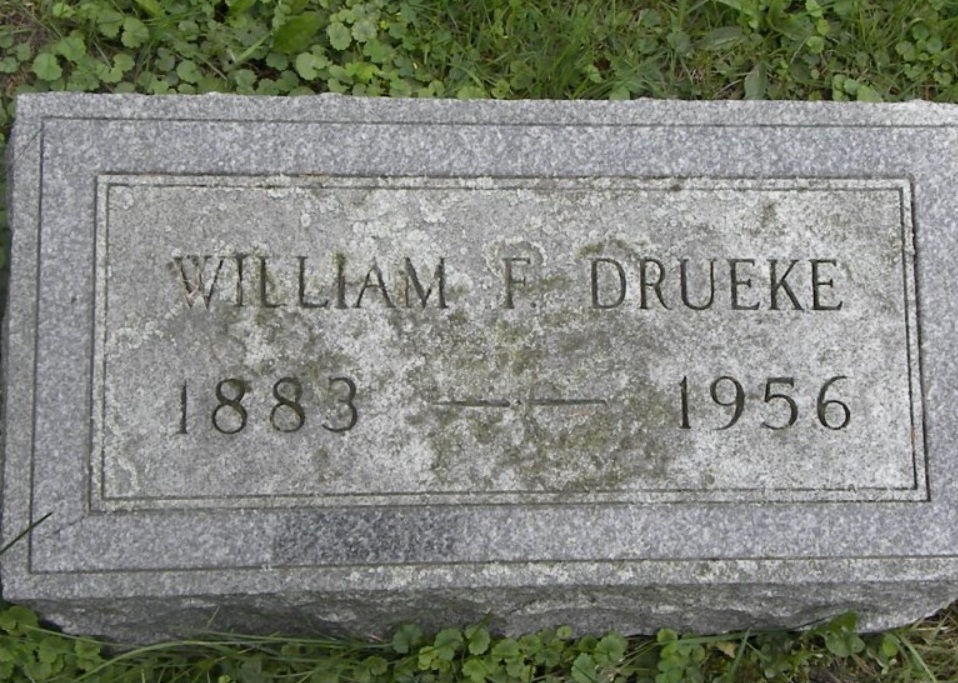
On January 18, 1956, William Francis Drueke, died at age 72 of an abdominal aortic aneurism at Berea College Hospital in Berea, Kentucky. He and Rose were driving to Florida for a two-month vacation. Following a funeral mass at St. Stephen's Church in Grand Rapids, he was buried at Mount Calvary Cemetery. The Grand Rapids Herald, Thursday, January 19, 1956 The Grand Rapids Press, Thursday, January 19, 1956 The Grand Rapids Herald, Friday, January 20, 1956 Obituary in Grand Rapids Paper in January 1956 |
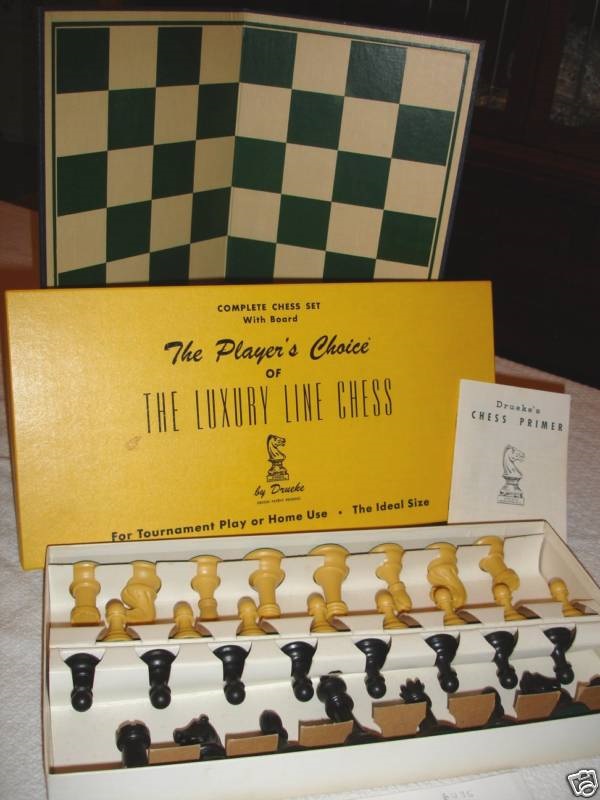
Rose Widowed at Age 73Grand Rapids, 1956-1973. With Will's death in 1956, Rose was widowed after 49 years of marriage. Will and Rose missed their 50th wedding anniversary by five months. In the 1956-1960 Grand Rapids directory listings for Wm. F. Drueke & Sons, Inc., William was President, Joseph was Vice President and Treasurer, and Marian was Secretary. In the 1967 directory, there is no company listing, but in their personal listings, Joseph was President and William was Vice President and Treasurer. In the 1968 directory listing for the company, William was President, Marian was Vice president and Secretary, and Willetta Potter was Treasurer. In their 1968 personal listings, William was President, and Joseph was Treasurer. On July 13, 1963, Rose's second cousin Otilia Leuchtweis O'Hara died after a long illness. A tribute appeared in the Fall 1963 issue of The Compass of Theta Phi Alpha, the sorority that Otilia helped found at the University of Michigan in 1912. Otilia was 73, seven years younger than Rose. Both Otilia and Rose had had their mothers die when they were young girls. Otilia was survived by her husband Judge John P. O'Hara, three sons, and 14 grandchildren. In July and August of 1972, American Bobby Fischer beat the Russian chess champion Boris Spassky in Reykjavik, Iceland. Drueke Games received a priceless promotion when photos showed Bobby Fischer practicing with Drueke chessmen. The match in Iceland between Fischer and Boris Spassky doubled orders for Drueke chess sets. An article on July 9, 1972, in the Sunday New York Times, mentioned increased demand for chess sets as a result of the match. The article mentioned that the William F. Drueke Company's Players Choice set was available for $9.50 by mail from the United States Chess Federation. | |||||||||||||||||||||||||||||||||||||||||||||||||||||||||||||||||||||||||||||||||||||||||||||||||||||||||||||||
Rose Dies in 1973 at Age 91
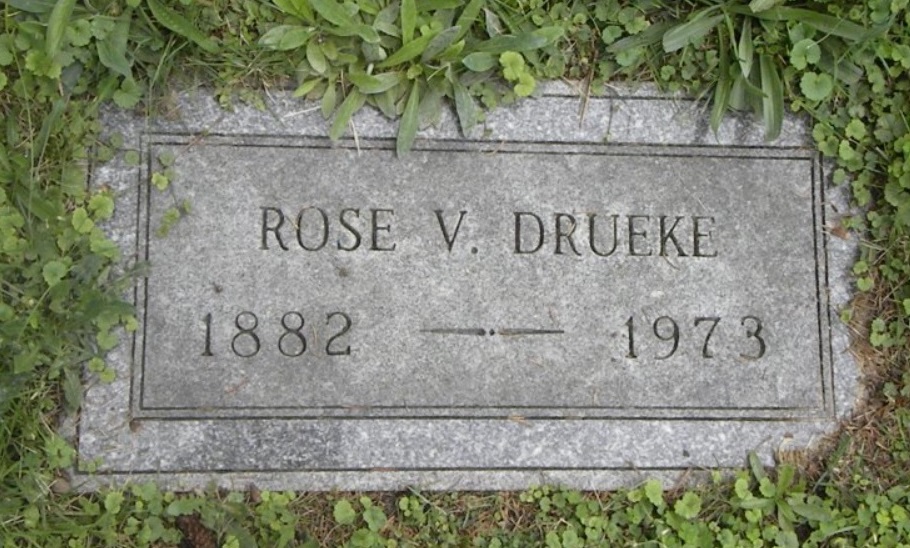
On August 13, 1973, Rose Viola Drueke, died at age 91 in her home. She had been a widow for 17 years. Following a funeral mass at St. Stephen's Church, she was buried at Mount Calvary Cemetery next to her husband Will. Grand Rapids Press, Monday August 13, 1973 Obituary in Grand Rapids Paper in August 1973 | ||||||||||||||||||||||||||||||||||||||||||||||||||||||||||||||||||||||||||||||||||||||||||||||||||||||||||||||||
William and Rose Smith Drueke: 6 children, 24 grandchildren
58 great grandchildrenInformation on great grandchildren has been excluded. A version of this page without the exclusion is available upon request. Contact Peter Biggins:
| ||||||||||||||||||||||||||||||||||||||||||||||||||||||||||||||||||||||||||||||||||||||||||||||||||||||||||||||||
Drueke PostscriptDrueke Brothers, 1956-1971. When William F. Drueke died in 1956, sons Joe and Bill continued running the Drueke game company that their father had founded in 1914. Bill did the manufacturing and Joe did the sales. Each brother owned a little over a third of the stock in the company. Their mother Rose and sister Marian Ederer owned the rest. Bill and Joe ran the company jointly until 1971; Bill was president all but two years in that time. Joe was president in 1967 and 1968. Operations continued at the factory at 601 3rd Street NW, bought in 1941 from the Grand Rapids Casket Co.
Two Drueke Game Companies, 1971-1987. In 1971, with the third generation entering the scene, there was difference of opinion between Joe and Bill. As a result, Joe started the Drueke Blue Chip Game Company. Joe retained ownership of his shares in Wm. F. Drueke and Sons, Inc. His new DBC sold mainly the same sort of games but imported chess games rather than manufacturing them. DBC was one of the first manufacturers of backgammon in its resurgence in the 1970 s. So, between 1971 and 1987 there were two Drueke game companies. William F. Drueke III supplied this Catalog No. 1977-1978 for Wm. F. Drueke and Sons, Inc.
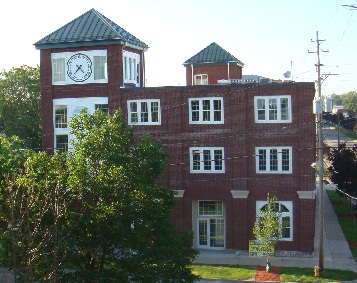
Low Tech, 1987-1990. In 1987, Bill and Marian sold thier stock to Low Tech Co. Soon after, Joe sold his stock to Low Tech Co., along with Drueke Blue Chip Game Company stock. As part of the sale agreement, Joe Sr. was to be a consultant and work in sales for a couple of years, while Joe Jr. became sales manager. Low Tech Co. retained the Drueke name. Carrom, 1990. In 1990, Low Tech Co. sold the assets of Drueke to Carrom Company of Ludington, Michigan. All Drueke game manufacturing was moved to the Carrom production facility. Carrom continues to use the Drueke name. See Ludington Daily News, July 15, 1992. Joe, Jr. continued to work with Carrom Co as a manufacturer s rep until 1994. A New Drueke Game Company, 2015. Like his grandfather and father, William F. Drueke, III, is now making cribbage, chess, and checker boards and tables. See Drueke Games. When the Carrom Company stopped making new Drueke boards, Bill started making replicas of his ancestors' boards. Says Bill, "I m back! Once again the Drueke family is in production, making the chessboards that have been preferred by chess enthusiasts and lovers of quality wood products for many years. This year (2015) begins the second 100 years for the family business." In connection with starting up production, Bill has written The History of Games by Drueke of Grand Rapids, Michigan. Chess Collectors International. The Chess Collectors International is a group of friends who have a mutual interest in collecting chess sets, and chess ephemera. In the January 2014 issue of The CCI - USA News, chess collector Duncan Pohl published an article entitled "The Drueke Company - Chess Designed in America." Duncan concludes, "The Drueke Company enjoyed a long history of game making in America and among their products were some out-standing examples of chess sets. They remain popular even today on the secondary market. I have always wondered why Carrom never continued making the popular sets from Drueke; the most likely reason, I have been told, is that the molds were destroyed when the company was sold. I can t help but think that was a great loss to all the chess players and collectors who have followed." Email from Kevin Noren. In an email on May 13, 2015, Kevin Noren of Lansing, Michigan, said about this web page, "I very much enjoyed your writings on the Drueke family. I have been an avid chess player for more than 40 years and Drueke products are very much a part of my life. The Players Choice plastic set was a favorite for tournament play, and some people are still using them, particularly in Michigan. They often go for a fair amount on eBay. Pictures can be seen of Bobby Fischer, known for his demanding standards for playing equipment, using them in at least two of the most important events of his career. "I regret not having visited the factory when it was still around. I have a lot of curiosity about Drueke and their products and found your writing highly informative. The Drueke Building. Robert Israels purchased the vacant Drueke factory in 2008 and completed a $7 million renovation in 2010. The renovated factory is called the Drueke Building, a 30,000 square foot office building. In an interview published in the Commercial Quarterly, February 1, 2010, David Israels explained why they were keeping the Drueke name on the renovated building: "The Drueke family and the Drueke game company are part of the history of Grand Rapids, and we still have Druekes living in the city. So, it is important for us to maintain that and showcase that as we go forward. It's amazing how many people we've talked to who have a story about a Drueke game. That's why we want to keep that name as part of the community."
In an article in The Grand Rapids Press, July 13, 2010, Dan Behm, President of Open Systems Technologies, mentions that they have named their conference rooms in the former Drueke Company building after board games once made on-site, like backgammon and cribbage. The conference room inside the clocktower is named after the Drueke game, "Shoot the Moon." Drueke games are made available in the rooms named after them. The games are intended to make employees feel at home, along with a gym and locker rooms, a small library, comfy chairs near a fireplace, and two kitchens. | ||||||||||||||||||||||||||||||||||||||||||||||||||||||||||||||||||||||||||||||||||||||||||||||||||||||||||||||||
European Cruise Drueke Games Drueke Postscript Census Directories Family Tree Top Home Page

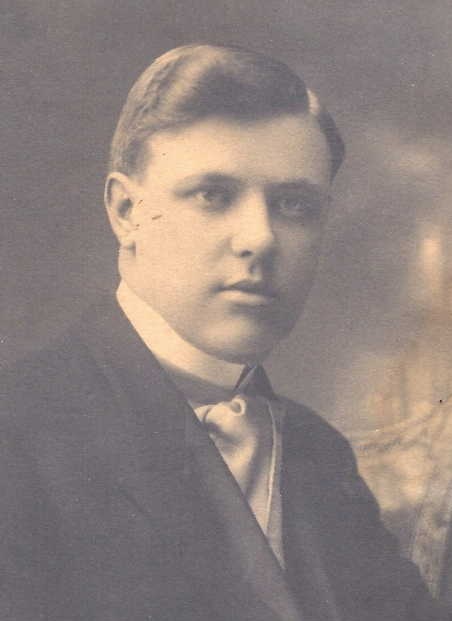
 Grand Rapids, 1883-1906. William Francis Drueke was born October 7, 1883, in Grand Rapids, Michigan. In 1883, there were 38 states in the Union.